CoreTracker
A job-application tracker I built for myself, then automated with a scheduled AI task until it fills itself in.
// the problem
Tracking a job search is its own job
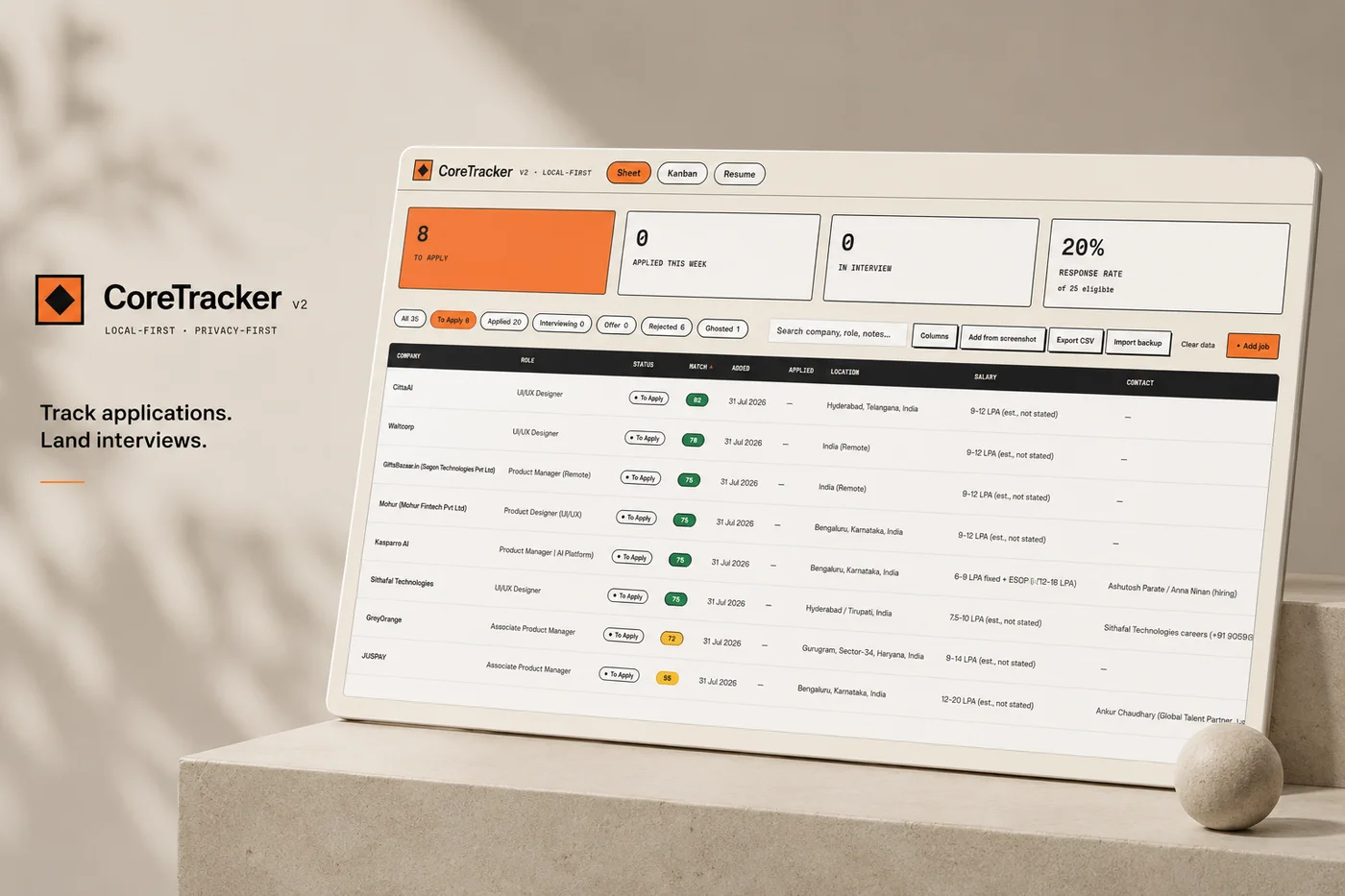
A search across dozens of roles needs a system — what to apply to, what is in flight, what came back. So I built one for myself: a Kanban board (To Apply, Applied, Interviewing, Offer, Rejected, Ghosted) with a match score for each role against my résumé.
// the architecture
Local-first, no backend
The app has no server. Every record lives in the browser’s IndexedDB. My data stays on my machine; a visitor who opens the link sees an empty board. That is a deliberate choice for something holding real employers, real rejections, and a ghosting or two.
// the work
V1 to V3, and where the AI came in
- V1 — manual: fill in a form to create a job card. No scoring of the listing against my résumé.
- V2 — card creation streamlined, and a JD-vs-résumé match score added to every role.
- V3 — automated: a scheduled Claude task finds the ten best listings matched to me, updates the tracker, and watches my mailbox to move a card the moment a reply lands.
V3 is the point. Every other project here describes an AI-directed workflow. This one is that workflow, shipped — the AI drafts, meaning it finds and files; I direct, meaning I decide what is worth applying to and how to pitch it.
// outcome
A tool I actually use
CoreTracker runs my own search day to day. The honest measure is not a metric — it is that the thing works well enough to rely on, and that V3 turned a manual tracker into one that keeps itself current while I get on with the interviews.